%3Aformat(webp)%2Fcountry%2F8b4aab1a-545f-4b7e-b6fa-985ddbd38ce7-saqsaywuama.jpeg&w=1920&q=75)
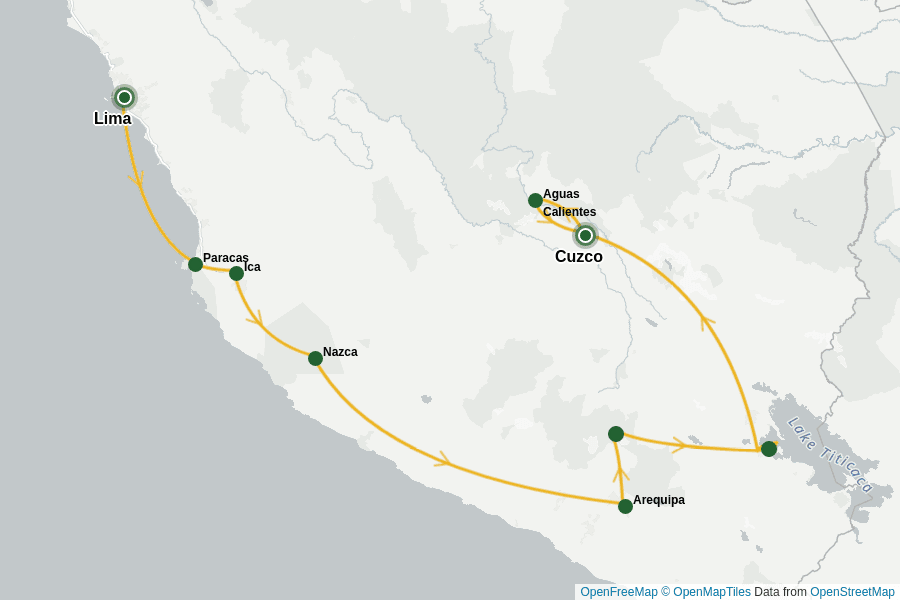
You can't drive all the way to Machu Picchu — there's no road to the site — so the answer for almost everyone is a scenic train followed by a short bus. From the Cusco area you take a train down the valley to the town of Aguas Calientes (also called Machu Picchu Pueblo), which sits directly below the ruins, and from there a shuttle bus climbs the final switchbacks to the entrance in about 30 minutes. It's a beautiful, comfortable journey and, reassuringly, requires no hiking at all.
The main practical decision is where you catch the train. Most trains leave from Ollantaytambo, in the Sacred Valley, about 1.5 to 2 hours from Aguas Calientes — which is why so many trips base you in the valley first (it's also gentler for acclimatising). You can also travel by a combined bus-and-train ("bimodal") service direct from Cusco, which takes longer overall.
Below we explain each leg clearly, where the trains depart, how the bus and tickets work, the other (more strenuous) ways in, and how to choose what suits you.
The quick answer
%3Aformat(webp)%2Fhubspot_blogs%2F7428715829-funnyalpacaswithawesomeamazinghilarioushair17.jpg&w=1920&q=75)
Machu Picchu sits on a remote ridge with no road to the top, so the journey has two simple legs:
1. The train to Aguas Calientes. A comfortable tourist train runs along the Urubamba river gorge to Aguas Calientes, the small town at the foot of the mountain. The scenery — river, cloud forest and towering peaks — is part of the experience, and the trains have large windows to enjoy it. There's no walking involved; you simply sit back and watch Peru roll by.
2. The bus up to the entrance. From Aguas Calientes, frequent shuttle buses zig-zag up the mountain road to the site entrance in about 30 minutes. The alternative is a steep uphill walk of around an hour and a half, which most visitors sensibly skip.
That's it: train down the valley, bus up the mountain, and you're at the gate. The only real planning is deciding where you start the train journey, and booking everything in good time — both of which we cover next.
%3Aformat(webp)%2Fhubspot_blogs%2F146480866949-titicacalakepeople.png&w=1920&q=75)
There are two practical ways to start:
From Ollantaytambo (the usual choice). Ollantaytambo, in the Sacred Valley, is the main departure station and the shortest rail option — roughly 1.5 to 2 hours to Aguas Calientes. Most itineraries spend a night or two in the Sacred Valley first, which is not only convenient but kinder for acclimatising, as the valley is lower than Cusco. If you're staying in the valley, this is the natural route.
From Cusco by "bimodal" service. You can also travel directly from Cusco using a combined bus-and-train service: a coach takes you from Cusco to the railhead, where you join the train. It's straightforward but longer — around 3.5 to 4.5 hours in total. The old station at Poroy, near Cusco, now operates only seasonally, so most Cusco departures are bimodal.
The train companies. Two operators share the line — PeruRail and Inca Rail — each offering several classes, from comfortable standard carriages to panoramic "observatory" coaches with glass roofs, and even luxury dining services. Any of them gets you there in comfort; the scenic Vistadome-style carriages are a popular choice for the views. Seats face large windows, and light refreshments are usually served.
%3Aformat(webp)%2Fimg%2F2048x1536%2F162721.jpg&w=1920&q=75)
The shuttle bus. At Aguas Calientes, the shuttle buses to the entrance run frequently through the day and take about 30 minutes each way. Queues form at peak times but move quickly, and your bus tickets are usually arranged as part of a tour.
Entry tickets. Machu Picchu uses timed-entry tickets with defined circuits, and a licensed guide is normally required. Numbers are capped, so tickets — especially for popular times and any add-on climbs such as Huayna Picchu — sell out well in advance. This is a place where booking early genuinely matters.
Book ahead. In practice the trains, entry tickets, bus tickets and guide all need reserving in advance, and in high season (roughly May–September) they go quickly. If you're travelling independently, book months ahead; on an organised trip all of this is handled for you, which removes the single biggest logistical headache of visiting Machu Picchu.
Luggage. Trains to Aguas Calientes allow only a small bag (typically around 5kg), so take just what you need for the day or an overnight and leave your main luggage at your hotel in Cusco or the Sacred Valley. Pack your daypack with water, sun protection, a warm layer, a waterproof and your passport.
%3Aformat(webp)%2Fimg%2F2048x1536%2F219032.jpg&w=1920&q=75)
The trekking routes. For keen walkers, the classic four-day Inca Trail arrives dramatically through the Sun Gate, and a one-day "Short Inca Trail" walks just the final stretch. Both need good fitness, permits and advance booking, and both are entirely optional — the train reaches the same place far more easily.
The budget back route. Some independent travellers reach Aguas Calientes overland via Hidroeléctrica, followed by a two-to-three-hour walk along the railway tracks. It's cheaper but long, tiring and not recommended for most travellers — the train is far more comfortable and reliable.
Choosing what's right for you. For the great majority of over-50s the answer is simple: base yourself in the Sacred Valley, take the train from Ollantaytambo, and the shuttle bus up. It's the shortest, most comfortable route, and it doubles as sensible acclimatisation.
How our experience helps
Getting to Machu Picchu is the most logistically fiddly part of a Peru trip — trains, timed tickets, buses, guides and luggage all have to line up, and they sell out. On our trips it's all arranged and sequenced for you: the right train from the right station, entry tickets secured, a licensed guide, and an itinerary that eases you into the altitude first. You simply enjoy the journey. Our travellers are consistently relieved to find that the part they worried about most was, in the end, the easiest.
Frequently asked questions
Can you drive to Machu Picchu? No — there's no road to the site. You reach it by train to Aguas Calientes and then a short shuttle bus up to the entrance.
How long does it take to get from Cusco to Machu Picchu? From Ollantaytambo in the Sacred Valley it's about 1.5–2 hours by train, plus the 30-minute bus. Travelling all the way from Cusco by bimodal service takes around 3.5–4.5 hours in total.
Do I have to hike to Machu Picchu? Not at all. The train-and-bus route involves no hiking. Treks such as the Inca Trail are optional alternatives for keen walkers.
Which train company or class is best? Both PeruRail and Inca Rail are comfortable and reliable. The panoramic Vistadome-style carriages are popular for their views; standard classes are perfectly comfortable and cheaper.
How far in advance should I book? As early as you can — trains and timed entry tickets sell out, especially in high season. On a tour it's booked for you; independently, aim for several months ahead.
How much luggage can I take on the train? Only a small bag, typically around 5kg, so travel light and leave your main case at your hotel in Cusco or the Sacred Valley.
Is the journey difficult for older travellers? No — it's one of the easier parts of the trip. The train is comfortable and the bus does the climbing. Basing yourself in the Sacred Valley first keeps it short and helps with the altitude.
Related reading

Customer Satisfaction
Ventura Travel Brands' tours have been rated as excellent by travellers
%3Aformat(webp)%2Fe7209c14-91b8-45db-adf7-23e2e7465143-ventura-travel-icon.png&w=1920&q=75)
A trusted travel partner for over 2 decades
Over 100,000 people have travelled with Ventura Travel's brands since 2001

Sustainability Certification – TourCert
As a responsible Tour Operator, we are certified by TourCert
%3Aformat(webp)%2Fuser%2F369f1f77-6c72-4feb-8c49-7dcda8fa4d9b-imagen_generada.png&w=1920&q=75)
Mathilde Siccardi
Brand Director Viventura
%3Aformat(webp)%2Fuser%2F97e51b2b-9e9d-4832-b179-05a00540180b-matthew-jones.png&w=1920&q=75)
Matthew Jones
Sales Specialist UK Market
%3Aformat(webp)%2Fday_detail%2F9d867558-f96f-4d35-a27d-a091dd43e6c5-paul-vhze9fd9mrs-unsplash.jpg&w=1920&q=75)
%3Aformat(webp)%2Fday_detail%2Fcc08b512-78f2-4278-97fd-481027441792-aarom-ore-yrqyn1gb80k-unsplash.jpg&w=1920&q=75)
%3Aformat(webp)%2Fheader_media%2Fe1ee5a5c-8a9e-4884-8dcf-fd82866a1552-header-xpbc.jpg&w=1920&q=75)
%3Aformat(webp)%2Fimg%2F2048x1536%2F162755.jpg&w=1920&q=75)