%3Aformat(webp)%2Fcountry%2F8b4aab1a-545f-4b7e-b6fa-985ddbd38ce7-saqsaywuama.jpeg&w=1920&q=75)
You don't need to be especially fit to see Machu Picchu, and you certainly don't have to hike the Inca Trail to get there. The vast majority of visitors — including plenty of people in their 60s and 70s — arrive comfortably by train and bus, then explore the citadel on foot at their own pace. What you do need is to be steady on your feet: Machu Picchu is a hillside of uneven Inca stonework, terraces and steps, so it rewards reasonable mobility and a willingness to take your time far more than any particular level of athleticism.
If you can manage a day of gentle-to-moderate walking on uneven ground with some stairs — think a hilly country walk, or a full day of city sightseeing — you can enjoy Machu Picchu. And because the site sits at 2,430 m, lower than Cusco, the altitude is less of a factor here than most people fear.
This guide explains exactly how you get there, how much walking is really involved, the gentler ticket routes, how to prepare, and what to consider if you have knee, hip or heart concerns or are travelling over 60.
The quick answer
%3Aformat(webp)%2Fhubspot_blogs%2F7428715829-funnyalpacaswithawesomeamazinghilarioushair17.jpg&w=1920&q=75)
This is the biggest misunderstanding about Machu Picchu, so let's clear it up: the Inca Trail is just one way in, and most visitors don't take it.
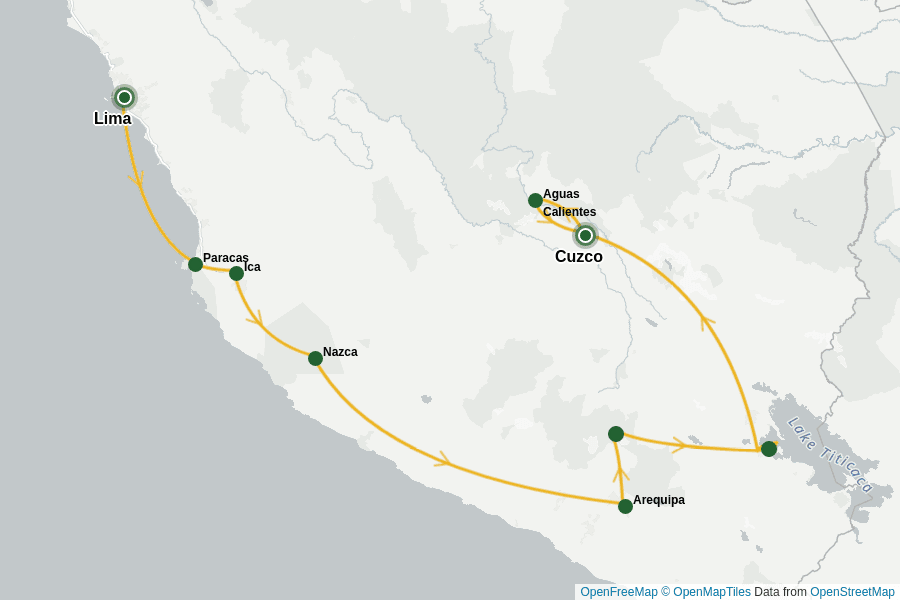
By train — how the majority arrive. From Cusco or the Sacred Valley you take a comfortable, scenic train down the Urubamba valley to the town of Aguas Calientes (also called Machu Picchu Pueblo), which sits right below the site. From there a shuttle bus climbs the switchback road to the entrance in about 25–30 minutes. No trekking, no camping — just a beautiful train journey and a short bus ride. This is the route we use for travellers who want the citadel without a multi-day hike.
The classic Inca Trail is a wonderful but demanding four-day, roughly 43 km trek, with camping and a high pass at over 4,200 m. Permits are strictly limited and sell out months ahead, and it genuinely requires good fitness and a head for multi-day walking. It's superb if that's what you want — but it is entirely optional.
Shorter options exist too, including a one-day "Short Inca Trail" that walks only the final stretch to the Sun Gate, for those who want a taste of the trail without the camping.
In short: choose the train if you want the sight without the strain. You lose none of Machu Picchu itself.
%3Aformat(webp)%2Fhubspot_blogs%2F146480866949-titicacalakepeople.png&w=1920&q=75)
Once inside, Machu Picchu is explored on foot along set one-way routes. The site now uses timed tickets and defined circuits, and a licensed guide is normally required — your trip organiser arranges all of this. A typical visit is around one and a half to three hours of walking.
What to expect underfoot:
The good news is that the routes are not all equally demanding. Some circuits are shorter and flatter while still delivering that iconic view of the citadel; others climb higher for different perspectives. If stairs are a concern, you or your guide can choose a gentler route in advance. Going early or later in the day also brings cooler temperatures and thinner crowds, which makes the walking easier.
The steep climbs are optional. Huayna Picchu — the tall peak in the classic photo — and Machu Picchu Mountain are separate, strenuous, exposed climbs that need their own tickets and a good head for heights. They're add-ons for keen walkers, not part of the standard visit. Skipping them costs you nothing of the main experience.
%3Aformat(webp)%2Fimg%2F2048x1536%2F162721.jpg&w=1920&q=75)
A little preparation makes Machu Picchu far more enjoyable.
In the weeks before you travel
Aids that help
If you have joint, mobility or heart concerns
Handled thoughtfully, a little planning turns Machu Picchu from a worry into the highlight of the trip.
%3Aformat(webp)%2Fimg%2F2048x1536%2F219032.jpg&w=1920&q=75)
Can you visit Machu Picchu in your 60s or 70s? For the great majority of people, yes — comfortably. We regularly welcome travellers in this age group, and the deciding factor is rarely age itself but steadiness on your feet and a willingness to take things slowly. If you can enjoy a hilly day's walk at home, you can enjoy Machu Picchu.
How our experience shapes the day
Because we run small groups, our guides can set an unhurried pace and adapt the route to the people on the trip rather than marching everyone through. We reach the site by train and bus — no trek required — and time our visits to avoid the hottest, busiest hours. Our Peruvian guides know which circuit gives the best view for the least climbing, where the sensible rest points are, and how to make the most of the visit without rushing. And because Machu Picchu sits lower than Cusco, we plan the surrounding days so you've already adjusted to the altitude before you arrive. None of this changes the terrain, but it takes away the pressure — which is usually what makes the difference.
Frequently asked questions
Do I need to train for months to visit Machu Picchu? No. If you arrive by train, gentle regular walking with some hills and stairs in the weeks beforehand is plenty. It's a day of moderate walking, not an endurance event.
How many steps are there at Machu Picchu? Enough that stairs are the main physical feature — many, of varying heights, often without rails. There's no single count, but choosing a gentler circuit and taking your time both help a great deal.
Is Machu Picchu suitable if I use a walking stick? Often yes, with care — walking poles with rubber tips are allowed and helpful. If you rely on a stick for significant support, or struggle with uneven ground and stairs, speak to your trip organiser about the gentlest route and realistic expectations.
Can I see Machu Picchu without climbing Huayna Picchu? Absolutely. Huayna Picchu is a separate, steep, optional climb. The standard visit — including the famous view — doesn't require it at all.
Is there anywhere to sit and rest? There are natural spots to pause on terraces and walls, though no formal seating throughout. A slow pace with regular short stops works best, and your guide will know the good places.
What if I get tired partway round? The circuits are designed as manageable loops, and your guide paces the group. Tell them if you need to slow down — there's no prize for speed, and the views reward lingering anyway.
Related reading

Customer Satisfaction
Ventura Travel Brands' tours have been rated as excellent by travellers
%3Aformat(webp)%2Fe7209c14-91b8-45db-adf7-23e2e7465143-ventura-travel-icon.png&w=1920&q=75)
A trusted travel partner for over 2 decades
Over 100,000 people have travelled with Ventura Travel's brands since 2001

Sustainability Certification – TourCert
As a responsible Tour Operator, we are certified by TourCert
%3Aformat(webp)%2Fuser%2F369f1f77-6c72-4feb-8c49-7dcda8fa4d9b-imagen_generada.png&w=1920&q=75)
Mathilde Siccardi
Brand Director Viventura
%3Aformat(webp)%2Fuser%2F97e51b2b-9e9d-4832-b179-05a00540180b-matthew-jones.png&w=1920&q=75)
Matthew Jones
Sales Specialist UK Market
%3Aformat(webp)%2Fday_detail%2F9d867558-f96f-4d35-a27d-a091dd43e6c5-paul-vhze9fd9mrs-unsplash.jpg&w=1920&q=75)
%3Aformat(webp)%2Fday_detail%2Fcc08b512-78f2-4278-97fd-481027441792-aarom-ore-yrqyn1gb80k-unsplash.jpg&w=1920&q=75)
%3Aformat(webp)%2Fheader_media%2Fe1ee5a5c-8a9e-4884-8dcf-fd82866a1552-header-xpbc.jpg&w=1920&q=75)
%3Aformat(webp)%2Fimg%2F2048x1536%2F162755.jpg&w=1920&q=75)