%3Aformat(webp)%2Fcountry%2F8b4aab1a-545f-4b7e-b6fa-985ddbd38ce7-saqsaywuama.jpeg&w=1920&q=75)
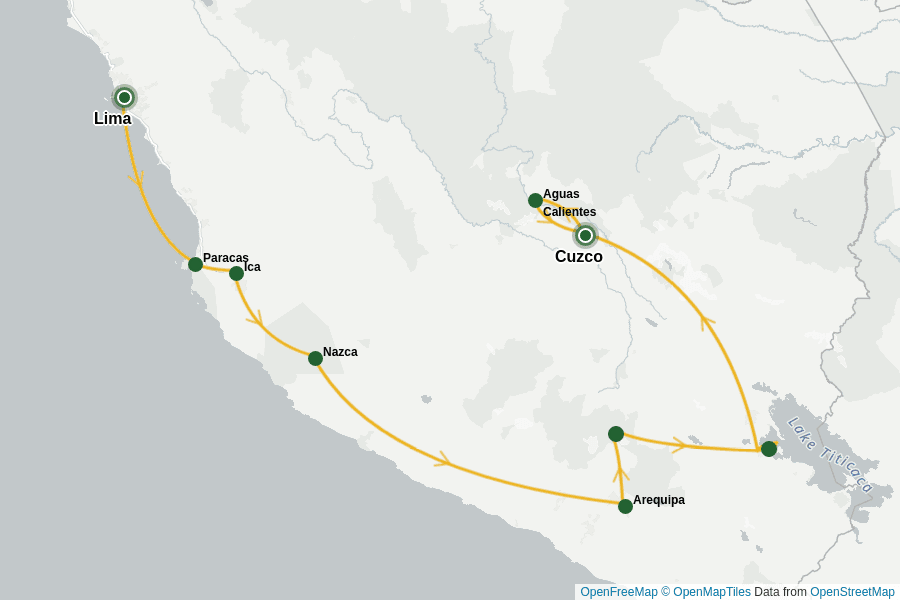
For most people the honest answer is: yes, you will notice the altitude in Cusco and the Sacred Valley — but it is usually mild, short-lived and very rarely stops anyone enjoying Peru. The single most useful thing to understand is that Machu Picchu itself sits lower than Cusco, so the famous citadel is not the hard part. The height you actually need to plan around is Cusco (about 3,400 m) and, if you go, Lake Titicaca (about 3,800 m) — not Machu Picchu (about 2,430 m).
Altitude affects people unpredictably. Fitness, age and how you've coped on past trips are all poor predictors, so it's worth being prepared whoever you are. In practice, though, what most over-50s experience is the familiar first-day mix of a mild headache, breathlessness on the hills and a broken night's sleep — not anything dangerous. With a sensible arrival plan, a day or two to adjust, plenty of water and, for some, a short course of altitude medication, the great majority of our UK travellers move through the Andes comfortably.
Below you'll find exactly how high each place is, what to expect and when, how to prevent and manage symptoms, and the specific things worth raising with your GP if you're over 60 or managing a health condition.
The quick answer
%3Aformat(webp)%2Fhubspot_blogs%2F7428715829-funnyalpacaswithawesomeamazinghilarioushair17.jpg&w=1920&q=75)
Peru runs from the sea to high mountain passes, so "the altitude in Peru" isn't a single number. Here are the places most itineraries include and how high they sit:
The most common misconception is that Machu Picchu is the highest and toughest point. It isn't. If you can manage Cusco, Machu Picchu will feel like a relief — it's nearly a kilometre lower. What actually catches people out is flying straight into Cusco from Lima and trying to sightsee the same afternoon.
A kinder sequence. Where the itinerary allows, it's far gentler to go from Cusco's airport straight down to the Sacred Valley for your first night or two, then return up to Cusco once you've adjusted. You gain height gradually rather than all at once, and you spend your most vulnerable first 24 hours at 2,800 m instead of 3,400 m. Many experienced Peru operators, ourselves included, build their routes this way for exactly this reason.
A seasonal note. The altitude feels the same all year, but in the dry season (May–September) nights at height are colder and clearer, which can make that first night's sleep harder. Pack warm layers.
%3Aformat(webp)%2Fhubspot_blogs%2F146480866949-titicacalakepeople.png&w=1920&q=75)
Mild altitude sickness — properly called acute mountain sickness, and known in Peru as soroche — is common above about 2,500 m and usually appears 6 to 24 hours after you arrive at height. For most people it feels like a hangover they didn't earn:
Unpleasant, yes — dangerous, no. These symptoms typically ease within one to three days as your body adjusts, and for most people drinking more water, resting on arrival and not rushing is all that's needed.
So who feels it? Here's the counter-intuitive part: fitness, age and gender are poor predictors. Keen runners sometimes struggle while their less sporty partners barely notice. Having coped well at altitude before is reassuring but no guarantee. The one dependable pattern is that going up too fast is the biggest risk — and that's the very thing within your control.
Realistic expectations. The overwhelming majority of our UK travellers, including those in their 60s and 70s, experience nothing worse than a first-day headache and an early night. The serious forms of altitude illness — fluid on the lungs or brain, known as HAPE and HACE — are rare below 3,500 m, almost always come with clear warning signs, and are largely prevented by sensible pacing. We cover those warning signs, and what to do, next.
%3Aformat(webp)%2Fimg%2F2048x1536%2F162721.jpg&w=1920&q=75)
Prevention is mostly about pace and patience, with medication as a useful backup for some.
Before you travel
On arrival and at height
If symptoms don't settle
Handled this way, altitude becomes a manageable part of a Peru trip rather than a threat to it.
%3Aformat(webp)%2Fimg%2F2048x1536%2F219032.jpg&w=1920&q=75)
Is altitude riskier as you get older? Reassuringly, age on its own is not a strong predictor of altitude sickness — plenty of travellers in their 70s do wonderfully in the Andes. What matters far more than the number is your underlying health. It's worth a chat with your GP before booking if you have:
For most such travellers the answer is still a confident "yes, with a plan" — but your doctor can advise on medication, pace and whether the highest stops such as Lake Titicaca are wise for you. This article is general guidance, not a substitute for personal medical advice.
How our experience shapes this advice
We run small-group trips through the Peruvian Andes throughout the year, and the way we build our itineraries reflects everything above. We sequence routes to gain height gradually — typically heading to the lower Sacred Valley before Cusco, rather than sightseeing at 3,400 m on day one. Our groups are small, so guides notice quickly when someone is struggling and can ease the day's pace. Our Peruvian guides are experienced with altitude, carry oxygen on the higher excursions, and know the local clinics and pharmacies if they're ever needed. And because the pace is unhurried, there's room to rest an afternoon without unravelling the trip. None of this makes altitude vanish — nothing does — but it's the practical difference between altitude being a footnote and being a problem.
Frequently asked questions
Will I definitely get altitude sickness in Peru? Not necessarily. Many people feel only mild first-day symptoms, and some feel very little. What's near-universal is being a bit slower and more out of breath at 3,400 m — that's normal and settles within a day or two.
Is Machu Picchu at high altitude? Less than most people expect. At about 2,430 m it's lower than Cusco, so if you've coped with Cusco you'll be comfortable there. The walking around the site is more of a factor than the height.
How long does it take to acclimatise? Usually one to three days. Good itineraries build in a gentle start, which is why the order you visit places in matters as much as the places themselves.
Should I take Diamox? It helps many people, but it's a prescription decision for you and your GP or travel clinic — not something to start on a whim. Ask well before you travel so there's time to try it if you need to.
Does being fit protect me? No. Fitness helps with the walking, but it doesn't prevent altitude sickness — and very fit people sometimes struggle because they push too hard on arrival. Ease off for the first day or two regardless.
Can I still go with high blood pressure or a heart condition? Often yes, with your doctor's sign-off and a sensible route — but this is exactly the situation to discuss with your GP before booking, as it depends on your particular health.
What about flying in and out of Cusco? Flying in is quick but drops you straight to 3,400 m, so it's best not to over-exert on that first day. Heading down to the Sacred Valley soon after arrival is a gentle way to spend the first night.
Related reading

Customer Satisfaction
Ventura Travel Brands' tours have been rated as excellent by travellers
%3Aformat(webp)%2Fe7209c14-91b8-45db-adf7-23e2e7465143-ventura-travel-icon.png&w=1920&q=75)
A trusted travel partner for over 2 decades
Over 100,000 people have travelled with Ventura Travel's brands since 2001

Sustainability Certification – TourCert
As a responsible Tour Operator, we are certified by TourCert
%3Aformat(webp)%2Fuser%2F369f1f77-6c72-4feb-8c49-7dcda8fa4d9b-imagen_generada.png&w=1920&q=75)
Mathilde Siccardi
Brand Director Viventura
%3Aformat(webp)%2Fuser%2F97e51b2b-9e9d-4832-b179-05a00540180b-matthew-jones.png&w=1920&q=75)
Matthew Jones
Sales Specialist UK Market
%3Aformat(webp)%2Fday_detail%2F9d867558-f96f-4d35-a27d-a091dd43e6c5-paul-vhze9fd9mrs-unsplash.jpg&w=1920&q=75)
%3Aformat(webp)%2Fday_detail%2Fcc08b512-78f2-4278-97fd-481027441792-aarom-ore-yrqyn1gb80k-unsplash.jpg&w=1920&q=75)
%3Aformat(webp)%2Fheader_media%2Fe1ee5a5c-8a9e-4884-8dcf-fd82866a1552-header-xpbc.jpg&w=1920&q=75)
%3Aformat(webp)%2Fimg%2F2048x1536%2F162755.jpg&w=1920&q=75)