%3Aformat(webp)%2Fcountry%2F8b4aab1a-545f-4b7e-b6fa-985ddbd38ce7-saqsaywuama.jpeg&w=1920&q=75)
Yes — Peru is a safe and hugely rewarding destination for travellers over 60, provided you take the same sensible precautions you would in any large international city. Millions of visitors, including many in their 60s, 70s and beyond, explore Peru every year without incident. The realistic risk for tourists is opportunistic petty crime — pickpocketing and bag-snatching in busy city areas — rather than violence, and it's largely avoidable with a little awareness.
Your age is not a barrier to enjoying Peru. If anything, travelling at a considered pace, staying in good hotels and moving around with a guide — all things that suit many older travellers — naturally reduces the everyday risks. The parts of Peru associated with more serious crime are remote drug-producing regions far from the tourist routes, which you won't be going anywhere near.
Below we give an honest, practical rundown of the actual risks — petty theft, taxis, protests, natural hazards and health — and the simple habits that keep you comfortable and safe throughout.
The quick answer
%3Aformat(webp)%2Fhubspot_blogs%2F7428715829-funnyalpacaswithawesomeamazinghilarioushair17.jpg&w=1920&q=75)
For the overwhelming majority of visitors, the only safety issue they'll ever brush against is opportunistic theft — a bag lifted in a crowd, a phone snatched from a café table, a wallet gone in a packed market. The UK government notes that street crime, including muggings and thefts, is a problem in Lima, Cusco, Arequipa and other cities. It's the same advice as for any major world city, and the same simple habits defuse it:
None of this needs to make you anxious — it becomes second nature within a day. Tourists are rarely targeted for anything more serious, and a calm, aware traveller is a poor target.
%3Aformat(webp)%2Fhubspot_blogs%2F146480866949-titicacalakepeople.png&w=1920&q=75)
How you move around is where a little care matters most.
Taxis. The clearest official advice is to use licensed, booked or app-based taxis and not to hail cabs on the street — especially at Lima airport. Unofficial taxis are linked to the main serious risk for tourists: so-called "express kidnapping," where someone posing as a driver takes a passenger to withdraw cash from ATMs. It sounds alarming, but it's almost entirely avoidable: book taxis through your hotel or a reputable app, and don't get into unmarked cars. On an organised trip your transfers and transport are arranged for you, which removes this risk almost entirely.
ATMs. Use machines inside banks, shopping centres or hotels, in daylight, and be discreet. Avoid withdrawing large sums on the street.
Buses and trains. Tourist trains (such as those to Machu Picchu) and reputable coach services are comfortable and safe; keep your valuables with you rather than in overhead racks or the hold, and stay aware at busy stations.
Walking. Stick to well-populated, well-lit areas, particularly after dark, and ask your hotel or guide which neighbourhoods are best avoided — it varies by city.
%3Aformat(webp)%2Fimg%2F2048x1536%2F162721.jpg&w=1920&q=75)
Political demonstrations. Peru sees periodic protests that can escalate quickly and cause roadblocks and travel disruption, including to trains and, occasionally, airports. They're usually announced and localised. The advice is simple: stay away from demonstrations — foreigners taking part risk detention — and build a little flexibility into your plans. A good local operator monitors the situation and reroutes around trouble.
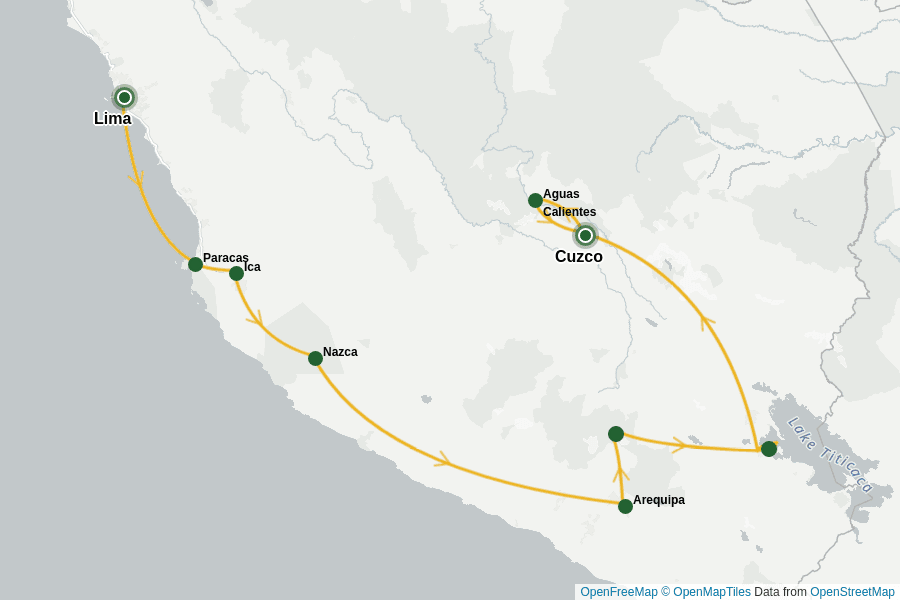
Regions to avoid. The parts of Peru linked to serious organised crime are the remote drug-producing areas: the Valley of the Apurímac, Ene and Mantaro rivers (VRAEM) and the border zones with Colombia, Ecuador and Brazil. These are nowhere near the classic tourist route of Lima, Cusco, the Sacred Valley, Machu Picchu and Lake Titicaca, so under normal circumstances you simply won't go there.
Natural hazards. Peru sits in an active earthquake zone, and tremors happen; familiarise yourself with your hotel's exits, as you would anywhere. In the rainy season (November to May), heavy rain can cause landslides and rockfalls that occasionally disrupt mountain roads and rail links near Machu Picchu — another reason a little schedule flexibility helps. Neither should put you off; they're simply part of travelling in the Andes.
%3Aformat(webp)%2Fimg%2F2048x1536%2F219032.jpg&w=1920&q=75)
For most over-60s, health and altitude matter more day-to-day than crime.
How our experience helps
Small-group travel with a local team removes most of the everyday worries this article describes. Your transfers and transport are booked, so the taxi risk disappears. Your guides know which areas to enjoy and which to skip, keep an eye on any protest or weather disruption and reroute if needed, and are on hand if you feel unwell or unsteady at altitude. Our pace is unhurried, our hotels are chosen for comfort and security, and there's always someone to ask. For many of our travellers, that support is exactly what turns a slightly daunting long-haul destination into a relaxed, confident trip.
Frequently asked questions
Is Peru safe for older travellers? Yes, with the ordinary precautions you'd take in any big city. The main risk is petty theft rather than violence, and travelling at a gentle pace with a guide reduces it further.
Is it safe to walk around Lima and Cusco? In the main tourist and central areas, yes — especially by day. Keep valuables out of sight, stick to busier streets after dark, and ask your hotel which neighbourhoods to avoid.
What's the safest way to use taxis in Peru? Book through your hotel or a reputable app rather than hailing on the street, and never get into an unmarked car. On a tour your transport is arranged, so this is rarely an issue.
Should I be worried about kidnapping? "Express kidnapping" via fake taxis is the risk to know about, and it's avoided by using booked taxis. Tourists on organised trips are very rarely affected.
Will protests affect my trip? Occasionally they cause roadblocks or delays. Avoid demonstrations entirely, allow a little flexibility, and rely on your operator to reroute — serious disruption to a well-planned trip is uncommon.
Do I need special travel insurance for Peru? Take out comprehensive cover that includes your age, any pre-existing conditions and travel to high altitude. It's essential, not optional, for peace of mind.
Is the food and water safe? Stick to bottled or purified water and be sensible with street food at first. Peru's cuisine is a highlight — most people enjoy it with nothing worse than a brief adjustment.
Related reading

Customer Satisfaction
Ventura Travel Brands' tours have been rated as excellent by travellers
%3Aformat(webp)%2Fe7209c14-91b8-45db-adf7-23e2e7465143-ventura-travel-icon.png&w=1920&q=75)
A trusted travel partner for over 2 decades
Over 100,000 people have travelled with Ventura Travel's brands since 2001

Sustainability Certification – TourCert
As a responsible Tour Operator, we are certified by TourCert
%3Aformat(webp)%2Fuser%2F369f1f77-6c72-4feb-8c49-7dcda8fa4d9b-imagen_generada.png&w=1920&q=75)
Mathilde Siccardi
Brand Director Viventura
%3Aformat(webp)%2Fuser%2F97e51b2b-9e9d-4832-b179-05a00540180b-matthew-jones.png&w=1920&q=75)
Matthew Jones
Sales Specialist UK Market
%3Aformat(webp)%2Fday_detail%2F9d867558-f96f-4d35-a27d-a091dd43e6c5-paul-vhze9fd9mrs-unsplash.jpg&w=1920&q=75)
%3Aformat(webp)%2Fday_detail%2Fcc08b512-78f2-4278-97fd-481027441792-aarom-ore-yrqyn1gb80k-unsplash.jpg&w=1920&q=75)
%3Aformat(webp)%2Fheader_media%2Fe1ee5a5c-8a9e-4884-8dcf-fd82866a1552-header-xpbc.jpg&w=1920&q=75)
%3Aformat(webp)%2Fimg%2F2048x1536%2F162755.jpg&w=1920&q=75)