%3Aformat(webp)%2Fcountry%2F8b4aab1a-545f-4b7e-b6fa-985ddbd38ce7-saqsaywuama.jpeg&w=1920&q=75)
The single most important thing to know about packing for Peru is to pack for layers, not for a season. In one day on the classic route you can go from a frosty Andean morning to strong midday sun to a cold evening at altitude — so a few thin layers you can add and remove beat one heavy coat every time. Get the layering right and you'll be comfortable everywhere from Lima's coast to Cusco's heights to Machu Picchu's cloud forest.
Beyond clothing, the essentials that make the real difference are good broken-in walking shoes, serious sun protection, your medication in your hand luggage, and a small daypack for day trips and the train to Machu Picchu. Peru's tourist infrastructure is good, laundry is easy to find, and you can buy most things you forget — so pack thoughtfully rather than heavily.
Below is a practical, region-by-region packing guide for the over-50s traveller: clothing, footwear, health kit, documents and a few things people always wish they'd brought.
The quick answer
%3Aformat(webp)%2Fhubspot_blogs%2F7428715829-funnyalpacaswithawesomeamazinghilarioushair17.jpg&w=1920&q=75)
Peru's classic route spans wildly different climates, sometimes in a single day, so layering is everything.
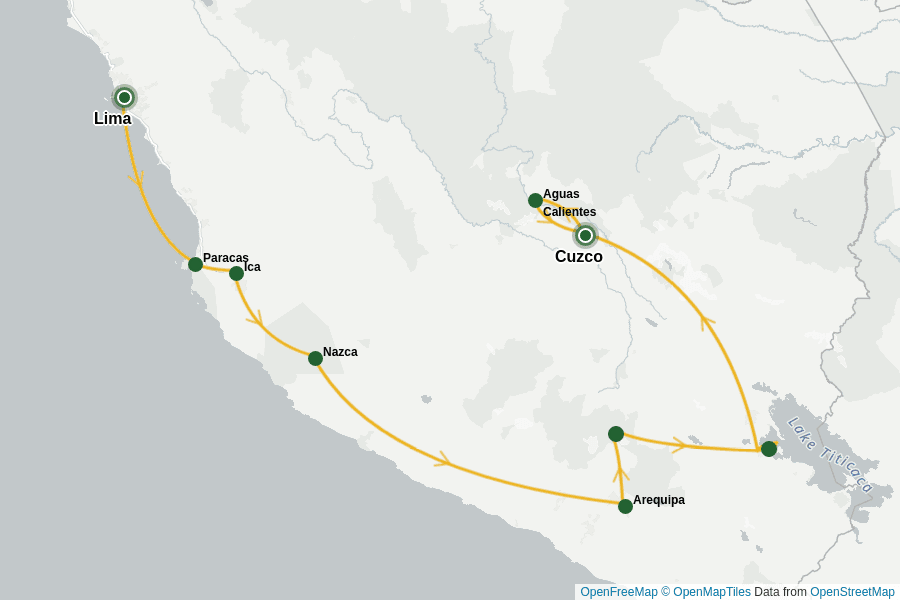
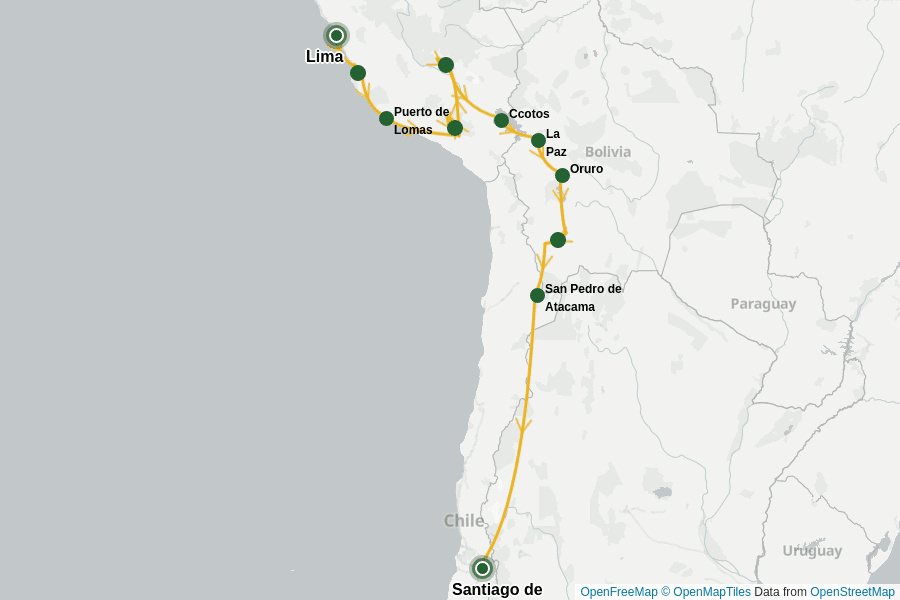
By region: Lima and the coast are mild and often grey and humid; Cusco, the Sacred Valley and Machu Picchu are warm by day and cold at night; Lake Titicaca is colder still; the Amazon is hot and humid, needing light long-sleeved cottons and insect protection. By season: the dry season (May–September) brings warm days and cold, clear nights (pack more warmth); the wet season (November–April) is milder but needs proper waterproofs.
Dress modestly for churches and villages, and remember laundry services are cheap and widely available, so you needn't pack for every single day.
%3Aformat(webp)%2Fhubspot_blogs%2F146480866949-titicacalakepeople.png&w=1920&q=75)
Footwear is the item most worth getting right.
Your daypack (20–30 litres) carries the day's essentials and is what you'll take on the train and up to Machu Picchu:
Walking poles are a real help on Machu Picchu's steps and gentle walks — note the site requires rubber tips. If you don't own any, they're easy to hire locally. Keep your main luggage to a soft duffel or modest case, as internal flights and trains have baggage limits and space can be tight.
%3Aformat(webp)%2Fimg%2F2048x1536%2F162721.jpg&w=1920&q=75)
A small, well-chosen health kit saves a lot of bother.
Medication (in your hand luggage)
Sun and skin
Toiletries
Please treat any health specifics as general guidance, and confirm your medication and vaccination needs with your GP or a travel clinic before you go.
%3Aformat(webp)%2Fimg%2F2048x1536%2F219032.jpg&w=1920&q=75)
Documents (keep originals safe, carry copies separately)
Money
Electronics
Luggage tips
How our experience helps
Because we know exactly where our routes go and how the weather and altitude behave, we send every traveller a tailored pre-trip pack with a clear, itinerary-specific packing list — so you bring what you'll actually use and nothing you won't. On the trip, comfortable transfers and sensible baggage handling mean you're not lugging heavy cases around, and your guide can point you to laundry, pharmacies and anywhere to top up.
Frequently asked questions
What is the one thing I shouldn't forget for Peru? Broken-in, grippy walking shoes and proper sun protection. Between them they prevent the two commonest discomforts — sore feet and sunburn at altitude.
Do I need special clothing for the altitude? Not special, but warm: temperatures drop sharply at night in Cusco and higher, so a warm jacket, hat and gloves matter even in the dry season. Layers let you adjust through the day.
Can I buy things I forget when I'm there? Mostly yes — Cusco and Lima have pharmacies, outdoor shops and markets, so sun cream, warm layers, ponchos and toiletries are easy to find. Bring prescription medicines from home, though.
How much luggage can I take? Keep it modest — internal flights and trains have baggage limits, and you'll appreciate travelling light. A soft duffel or medium case plus a daypack is ideal.
Do I need walking poles? They're very helpful on Machu Picchu's steps and gentle walks. Bring your own (with rubber tips) or hire a pair locally.
What plug adaptor does Peru use? Peru uses types A and C at 220 volts. Bring a suitable adaptor; most modern chargers handle the higher voltage, but check anything with a heating element.
Related reading

Customer Satisfaction
Ventura Travel Brands' tours have been rated as excellent by travellers
%3Aformat(webp)%2Fe7209c14-91b8-45db-adf7-23e2e7465143-ventura-travel-icon.png&w=1920&q=75)
A trusted travel partner for over 2 decades
Over 100,000 people have travelled with Ventura Travel's brands since 2001

Sustainability Certification – TourCert
As a responsible Tour Operator, we are certified by TourCert
%3Aformat(webp)%2Fuser%2F369f1f77-6c72-4feb-8c49-7dcda8fa4d9b-imagen_generada.png&w=1920&q=75)
Mathilde Siccardi
Brand Director Viventura
%3Aformat(webp)%2Fuser%2F97e51b2b-9e9d-4832-b179-05a00540180b-matthew-jones.png&w=1920&q=75)
Matthew Jones
Sales Specialist UK Market
%3Aformat(webp)%2Fday_detail%2F9d867558-f96f-4d35-a27d-a091dd43e6c5-paul-vhze9fd9mrs-unsplash.jpg&w=1920&q=75)
%3Aformat(webp)%2Fday_detail%2Fcc08b512-78f2-4278-97fd-481027441792-aarom-ore-yrqyn1gb80k-unsplash.jpg&w=1920&q=75)
%3Aformat(webp)%2Fheader_media%2Fe1ee5a5c-8a9e-4884-8dcf-fd82866a1552-header-xpbc.jpg&w=1920&q=75)
%3Aformat(webp)%2Fimg%2F2048x1536%2F162755.jpg&w=1920&q=75)