%3Aformat(webp)%2Fcountry%2F8b4aab1a-545f-4b7e-b6fa-985ddbd38ce7-saqsaywuama.jpeg&w=1920&q=75)
No, you do not have to trek to see Machu Picchu. On both of our Peru tours you reach the citadel the way most visitors now do: a panoramic train from Ollantaytambo down to Aguas Calientes, then a short bus up the switchback road to the entrance gate. There is no Inca Trail, no multi-day hike and no camping on either itinerary — every night is spent in a hotel.
That does not mean the trip is effortless. The walking that matters happens inside the sites themselves, on uneven Inca stonework and steps, and it happens at altitude. That combination, rather than raw fitness, is what to plan around.
In short
%3Aformat(webp)%2Fhubspot_blogs%2F7428715829-funnyalpacaswithawesomeamazinghilarioushair17.jpg&w=1920&q=75)
The approach unfolds over two days rather than four.
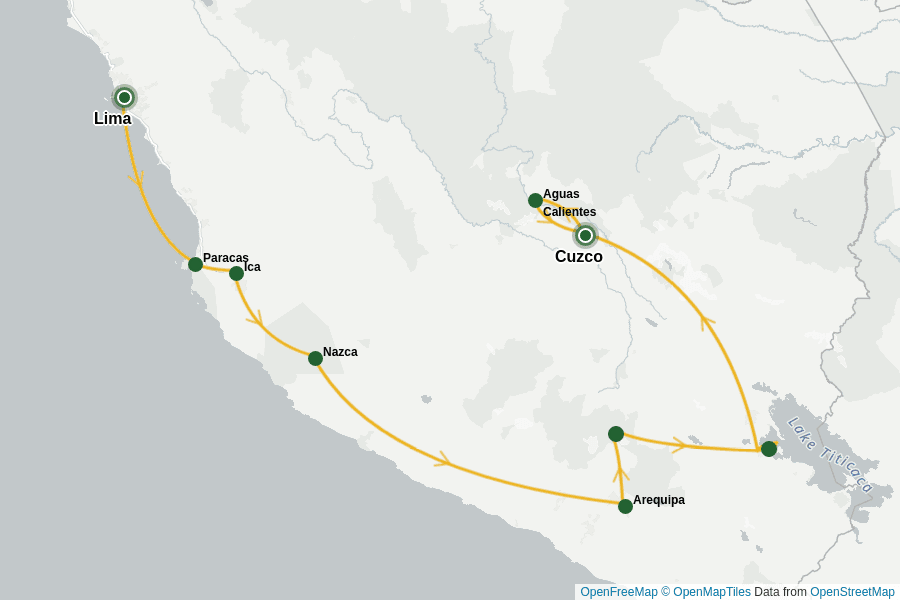
On the first of them you leave Cuzco for the Sacred Valley, stopping at the weaving village of Chinchero, the salt terraces of Maras and the concentric agricultural terraces of Moray, before walking the Inca streets of Ollantaytambo. As the day closes you board the panoramic-windowed train down the Urubamba gorge to Aguas Calientes, the small town below the ruins.
The following morning a bus climbs the switchback road to the entrance, arriving early. Your guide walks you through the citadel on the classic route — temples, terraces and palaces — with the Urubamba valley falling away below. Afterwards the bus takes you back down, and a train returns you along the Sacred Valley to Ollantaytambo.
If you would like to add the climb up Huayna Picchu, a moderate ascent of about 45 minutes, that can be arranged — but it sits outside the standard programme, and the great majority of our travellers do not do it.
We aim to secure early-morning entrance tickets for our groups. Availability is limited, particularly in the busy months, so booking well ahead genuinely matters here.
%3Aformat(webp)%2Fhubspot_blogs%2F146480866949-titicacalakepeople.png&w=1920&q=75)
This is where it pays to be candid. Our Peru tours involve no trekking, but they are not sedentary either.
Expect to be on your feet for a few hours at a stretch while exploring sites: Machu Picchu itself, the terraces at Moray, the fortress at Ollantaytambo, the colonial centre of Arequipa, the monastery of Santa Catalina. The ground is frequently uneven Inca stonework, and there are steps — sometimes steep, sometimes without a handrail. At the Colca Canyon viewpoints you walk short distances on rocky paths.
What you will not do is carry a rucksack between campsites, walk for a whole day, or sleep anywhere other than a hotel. Coach and train journeys cover the distances; the walking is the exploring.
If you are comfortable with a few hours of unhurried sightseeing on uneven ground, with pauses, you will manage this trip. If steps are a real difficulty, tell your specialist before you book — some individual site visits can be shortened, and it is better to know that in advance.
%3Aformat(webp)%2Fimg%2F2048x1536%2F162721.jpg&w=1920&q=75)
Peru's highlights sit high, and the thin air affects fit and unfit travellers alike — it is not a question of stamina.
Our itinerary is built to soften that. You begin at sea level in Lima, giving your body a gentle start, before flying up to Cuzco at 3,400 m. The first Cuzco days are deliberately unhurried. From there the route works through the Sacred Valley — which, usefully, sits lower than Cuzco — before the Andean train crosses La Raya at 4,323 m on the way to Lake Titicaca, and later the Patapampa pass at 4,910 m en route to Arequipa, where you drop back down to a comfortable 2,300 m.
We have written separately about altitude sickness in Cusco and Machu Picchu, which goes into how it feels and what helps. If altitude is your main hesitation, read that next — and speak to a specialist rather than guessing.
%3Aformat(webp)%2Fimg%2F2048x1536%2F219032.jpg&w=1920&q=75)
Two itineraries, both trek-free and both reaching Machu Picchu by train.
Peru: Treasures of the Andes — sixteen days covering Lima, Cuzco, the Sacred Valley, Machu Picchu, Lake Titicaca, the Colca Canyon and Arequipa. A maximum of 15 travellers. This is the one most first-time visitors choose.
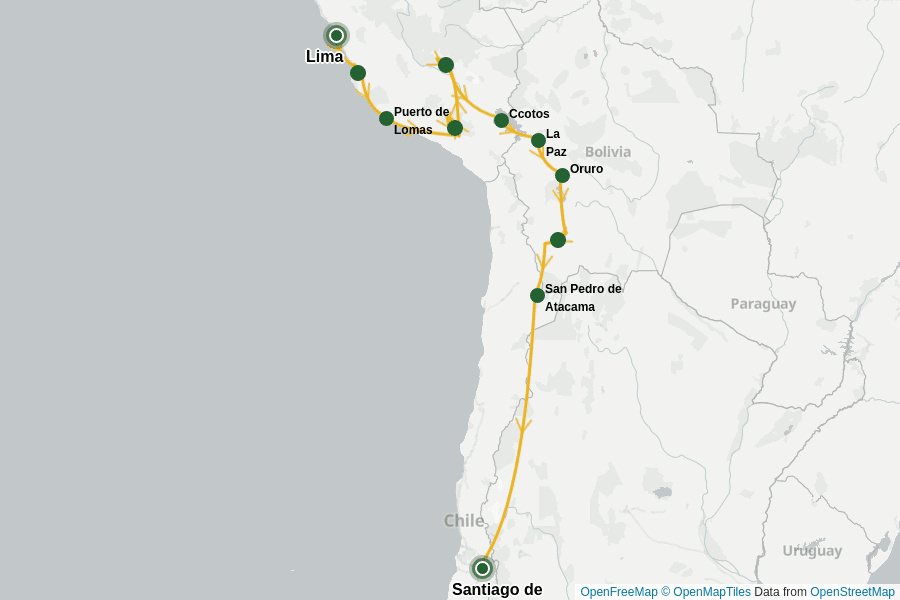
Peru, Bolivia & Chile: Andean Trilogy — the same Peruvian highlights, then onward across the Bolivian altiplano and into Chile. A maximum of 12 travellers. It is longer, higher and better suited to travellers who have done a long-haul trip or two before.
Both are land-only: you book the international flights that suit you, and we publish recommended routes and timings for each tour. Both run on guaranteed departures. Single rooms are available on both for a supplement — your specialist will confirm the current figure for your chosen date.
Not sure which fits? That is exactly the conversation our Peru specialists have every day.

Customer Satisfaction
Ventura Travel Brands' tours have been rated as excellent by travellers
%3Aformat(webp)%2Fe7209c14-91b8-45db-adf7-23e2e7465143-ventura-travel-icon.png&w=1920&q=75)
A trusted travel partner for over 2 decades
Over 100,000 people have travelled with Ventura Travel's brands since 2001

Sustainability Certification – TourCert
As a responsible Tour Operator, we are certified by TourCert
%3Aformat(webp)%2Fuser%2F97e51b2b-9e9d-4832-b179-05a00540180b-matthew-jones.png&w=1920&q=75)
Matthew Jones
Sales Specialist UK Market
%3Aformat(webp)%2Fuser%2F354bd62e-8c8e-4fc6-92af-6b4b0bfc4a66-imagen_generada.png&w=1920&q=75)
Rosa Pacheco
Trip Specialist
%3Aformat(webp)%2Fday_detail%2F9d867558-f96f-4d35-a27d-a091dd43e6c5-paul-vhze9fd9mrs-unsplash.jpg&w=1920&q=75)
%3Aformat(webp)%2Fday_detail%2Fcc08b512-78f2-4278-97fd-481027441792-aarom-ore-yrqyn1gb80k-unsplash.jpg&w=1920&q=75)
%3Aformat(webp)%2Fheader_media%2Fe1ee5a5c-8a9e-4884-8dcf-fd82866a1552-header-xpbc.jpg&w=1920&q=75)
%3Aformat(webp)%2Fimg%2F2048x1536%2F162755.jpg&w=1920&q=75)