%3Aformat(webp)%2Fhubspot_blogs%2F7429125229-shutterstock_138138455Medium1.jpg&w=1920&q=75)
Many myths surround the coca plant. While in Europe coca is mostly equated with the drug cocaine, chewing coca leaves has been widespread for centuries in Peru, Bolivia and many other Andean countries of Latin America. If you travel to this region, you'll almost certainly come across coca leaves.
But just how intoxicating, how dangerous, is a coca tea or chewing coca really? And what's the story with Coca-Cola – did it really contain cocaine? So you can hold your own next time this comes up in conversation, here's our round-up of the five most important things to know about the coca plant:
%3Aformat(webp)%2Fhubspot_blogs%2F7429125229-shutterstock_160103492Medium1.jpg&w=1920&q=75)
Not very. The effect of a coca tea is comparable to that of strong black tea or coffee. Its taste is rather grassy (“green”); physical or psychological complaints or dependencies – beyond those of coffee or tea – are generally not observed.
Coca, as the saying goes, actually helps to stave off hunger, tiredness and cold, and is very effective against altitude sickness. The Universidad Mayor de San Andrés (Bolivia), in collaboration with the French Institute of Scientific Research for Development, found that chewing coca leaves or drinking coca tea:
brings about a reduction in glucose consumption,
does not reduce food intake or hunger,
effectively prevents symptoms of altitude sickness,
can increase the respiratory rate and thus the uptake of oxygen into the blood.
“In the field of physiology, with respect to muscular exercise, we have noted that the capacity to do more work does not increase with coca chewing, but it does increase work tolerance. In relation to respiratory sensitivity, we could observe that chewing does have a stimulating effect on respiratory centres.”
%3Aformat(webp)%2Fhubspot_blogs%2F7429125229-Erythroxylum_coca__Khlers_MedizinalPflanzen204.jpg&w=1920&q=75)
No. No farmer or miner enjoys coca without adding a so-called llujt'a, a paste of minerals and/or ash. On the Altiplano, people generally use the ash of quinoa stalks and mix it with a little sugar and water or alcohol. Small balls are formed from the mixture and dried, which are then chewed together with the coca leaves in a pouch of the cheek.
Studies have shown that when chewing coca leaves, the llujt'a converts the alkaloid cocaine originally present in the leaves, through alkaline hydrolysis, into the alkaloid ecgonine – an alkaloid that lacks any addictive potential. Some also simply chew the leaves with the addition of stevia leaves, which give the bitter coca plant a sweetish aftertaste.
By adding a little calcium, meanwhile, some try to stop the formed ball of coca leaves dissolving into individual plant fibres in the mouth. So that the hard midrib doesn't poke out of the mass, most people draw the coca leaf between their incisors before chewing so that only the two sides of the leaf end up in the mouth, while the now-bare stalk is thrown away.
Chewing coca becomes a daily habit for many farm and mine workers, which produces no withdrawal symptoms if stopped, but certainly a sense of something missing – like giving up an evening ritual.
%3Aformat(webp)%2Fhubspot_blogs%2F7429125229-shutterstock_138138455Medium1.jpg&w=1920&q=75)
Fascinated by Latin America's rich cultural heritage and natural wonders, including the customs surrounding the coca plant? Discover our carefully crafted itineraries for a deep insight into the region's traditions and landscapes.
Yes. In 1887, Dr John Stith Pemberton of Atlanta created a syrup made from the leaves of the Andean coca plant and the African kola nut.
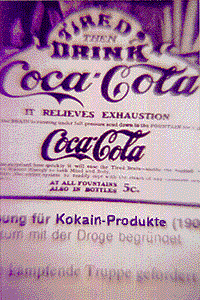
Unfortunately, the syrup, marketed as a cure-all for headaches and tiredness, was itself pretty unpalatable. But then Pemberton mixed the new syrup with soda water – and there you have a soft drink that quickly sold like hot cakes in so-called soda bars (soda bars were to well-to-do Americans at the end of the 19th century what coffee houses are to the Viennese). According to the “Austrian Pharmacists' Journal”, a litre of Coca-Cola contained about 250 milligrams of cocaine up until 1903. For comparison: when snorting cocaine, users take in an average of about 20 milligrams per “line”. After the addictive effect of cocaine gradually became known in Western countries, in 1902 the manufacturer switched to adding only non-alkaloid extracts of the coca leaves as flavouring.
This was not least to avoid losing the claim to the trademark. Whether coca is still used to make cola today is disputed. Coca-Cola denies it. The Stepan Company, however, holds a special permit to import and process coca leaves from Peru and Bolivia. Whether Coca-Cola benefits from this remains speculation.
Since the leaves of the coca shrub contain only about one per cent of the alkaloid known as cocaine, in the producing countries the cocaine content is usually greatly concentrated by extraction. The coca paste produced by the extraction is further processed into cocaine hydrochloride – a salt of hydrochloric acid. This colourless, odourless, bitter-tasting substance reaches the illegal market in powdered form as coke, mixed with cutting agents.
%3Aformat(webp)%2Fhubspot_blogs%2F7429125229-cocaMedium1.jpg&w=1920&q=75)
In a few words: in most Latin American countries, no; in Germany, yes. The tea “mate de coca” is the national drink in Peru and other Andean regions, and processing coca leaves into teas is even state-supported there. In Peru and Bolivia, coca tea is available in many supermarkets, ready-packed in teabags. In Germany, the coca plant falls under the Narcotics Act. Possessing or importing coca leaves is a criminal offence, so travellers shouldn't pack even coca tea or coca sweets as a souvenir after a trip to Peru.
%3Aformat(webp)%2Fhubspot_blogs%2F7429125229-shutterstock_186769721Medium1.jpg&w=1920&q=75)
Have you ever eaten coca leaves, or drunk a coca tea?
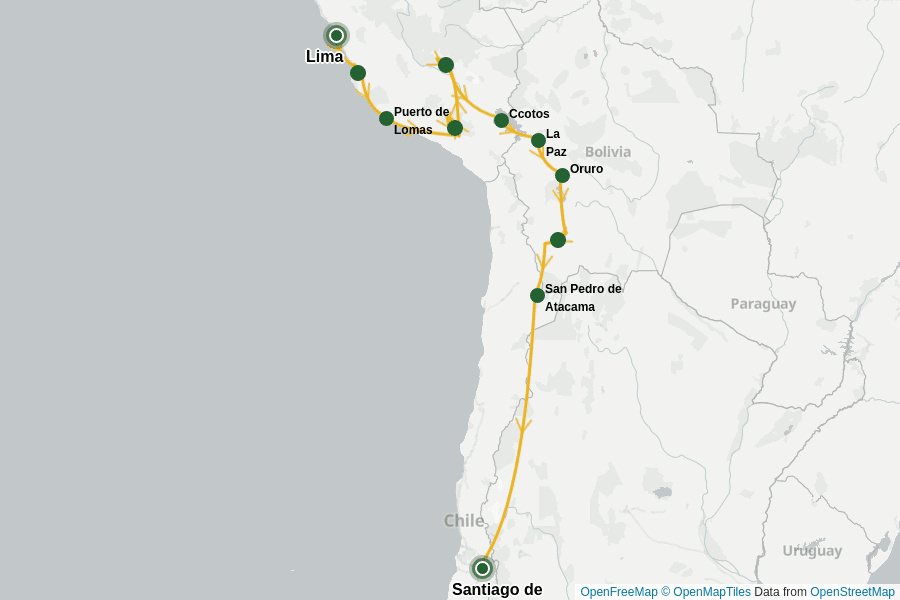
If you're interested in the history of the plant, on a trip to Bolivia I'd definitely recommend visiting the Museo de la Coca in La Paz, at Calle Linares #906, Bolivia. You can do this, for example, on our Bolivia tour, which is planned so that you experience the country up close. Other routes of ours take you through Bolivia too.
Contact us
We’d love to hear from you. Please fill out this form.
All fields marked with (*) are mandatory.
%3Aformat(webp)%2F632340e9-cac9-4edd-9fe6-d298101460eb-img20230225142546.jpg&w=1920&q=75)
%3Aformat(webp)%2Fhubspot_blogs%2F6068007882-PatagonieCapHorn15j.jpeg&w=1920&q=75)
%3Aformat(webp)%2Fhubspot_blogs%2F115849650773-SusanaBilderBPText13.jpg&w=1920&q=75)
%3Aformat(webp)%2F02e7f2c3-d3bc-4247-8176-ffa581b64506-vi_ventura_logo_1402px_full_color.png&w=1920&q=75)
%3Aformat(webp)%2Fprofile-picture%2F5fd79a46-6a23-4547-8518-b4068b58975f-f3895e68-219c-4e67-87c6-d80f42d2c815-9D14F6FB-5601-48CA-8E3C-B9B459218497.jpg&w=1920&q=75)
%3Aformat(webp)%2Fprofile-picture%2F16d4fa55-a01d-4c4d-89a0-c0ef30433177-b00f6910-f87f-437d-a370-84b636b084b9-7a1c726f-d235-472c-b4e0-c7553c729b9e.jpeg&w=1920&q=75)
%3Aformat(webp)%2Fprofile-picture%2Ff1b036fb-3cc5-4b59-beb3-f41c82e58932-52bd8473-9a08-49b8-9025-b47e6b62b14c-F427B006-14B0-4847-85AB-D370D8EB1197.jpg&w=1920&q=75)
%3Aformat(webp)%2Fprofile-picture%2F1b94eff9-5e96-4b30-803e-8093ce7b42ef-1630fbda-e666-49b7-9a9e-5ac18b0d1926-2C56EE68-21D4-4E67-BD45-6A6D4199A045.jpg&w=1920&q=75)
%3Aformat(webp)%2Fheader_media%2Fe1ee5a5c-8a9e-4884-8dcf-fd82866a1552-header-xpbc.jpg&w=1920&q=75)
%3Aformat(webp)%2Fimg%2F2048x1536%2F162755.jpg&w=1920&q=75)
%3Aformat(webp)%2Fday_detail%2F9d867558-f96f-4d35-a27d-a091dd43e6c5-paul-vhze9fd9mrs-unsplash.jpg&w=1920&q=75)
%3Aformat(webp)%2Fday_detail%2Fcc08b512-78f2-4278-97fd-481027441792-aarom-ore-yrqyn1gb80k-unsplash.jpg&w=1920&q=75)