%3Aformat(webp)%2Fhubspot_blogs%2F10216657838-UvwjDmnLIiEUJxnxGGRXHGgFfF9TfDSxyEtAfJELmiXKoMsJWEHlRryuU5y07ZbeBX6c_zc5TOMJT34QOnmZkKWL_9psyOmmtpxc8FmaDH6WaEtUUIIyUSjiwTShqDoJgj_mQa.png&w=1920&q=75)
Yes — you should expect to feel the altitude in Bolivia, and it's worth taking seriously, because Bolivia is higher than almost anywhere else you're likely to travel. La Paz sits at around 3,640 m, and — the crucial point — its airport at El Alto is over 4,000 m, so unlike most destinations you often arrive straight into extreme altitude. Add Lake Titicaca (3,800 m) and the Uyuni salt flats (3,660 m), and Bolivia asks more of your body than even neighbouring Peru.
The reassuring news is that, handled sensibly, the vast majority of travellers — including many over-60s — cope well. The symptoms are usually the familiar first-day mix of headache, breathlessness and broken sleep, and they ease as you adjust. The key is a gentle, well-planned approach: taking your first days very easy, sequencing the itinerary wisely, staying hydrated and, for some, taking altitude medication.
Below we explain exactly how high each place is, why arrival matters so much in Bolivia, what to expect, how to acclimatise, and the points to discuss with your GP.
The quick answer
%3Aformat(webp)%2Fhubspot_blogs%2F146480866949-MancoCapacmonument.png&w=1920&q=75)
Bolivia's highlands are genuinely high, and knowing the numbers helps you plan:
The headline is that Bolivia's classic highland sights are around or above 3,600 m throughout, higher than Peru's Cusco, and often reached without a gradual climb — so the altitude deserves real respect.
This is the crucial difference from many high-altitude trips: in Bolivia, you frequently arrive at extreme altitude with no gradual ascent — flying straight into El Alto at over 4,000 m from sea level. Your body has had no time to adjust, so the first 24 to 48 hours are when you're most likely to feel it, and where sensible planning matters most.
Good ways to soften the arrival:
Because arrival is the pinch point, a thoughtfully-sequenced itinerary is worth more in Bolivia than almost anywhere — it's exactly what turns the altitude from a shock into a manageable adjustment.
What it feels like. Mild altitude sickness (soroche) is common above about 2,500 m and usually appears within 6–24 hours: a headache, breathlessness on the slightest slope, a racing heart, broken sleep, mild nausea and tiredness. At Bolivia's heights these can be a little more pronounced than at Cusco, but for most people they remain uncomfortable rather than dangerous, easing over one to three days.
How to acclimatise:
If you feel worse rather than better — a severe headache painkillers won't touch, repeated vomiting, confusion, breathlessness at rest — don't go higher, rest, and seek help; descending brings rapid relief. Serious altitude illness is uncommon but genuinely possible at these heights, so take symptoms seriously.
%3Aformat(webp)%2Fheader_media%2F82b89548-fa6b-4a8c-b45b-7d4fba4d2a8a-199555.jpg&w=1920&q=75)
Is Bolivia's altitude riskier with age? Age itself isn't a strong predictor of altitude sickness, and many over-60s do wonderfully in Bolivia. But given how high the country is, your underlying health matters, and it's well worth a conversation with your GP before booking if you have a heart condition, high blood pressure, a lung condition (COPD, severe asthma), sleep apnoea, or have had recent major surgery. For many such travellers the answer is still "yes, with a careful plan"; for some, the very highest spots (Uyuni, Potosí) may warrant extra caution or a lower-altitude alternative. This article is general guidance, not personal medical advice.
How our experience helps
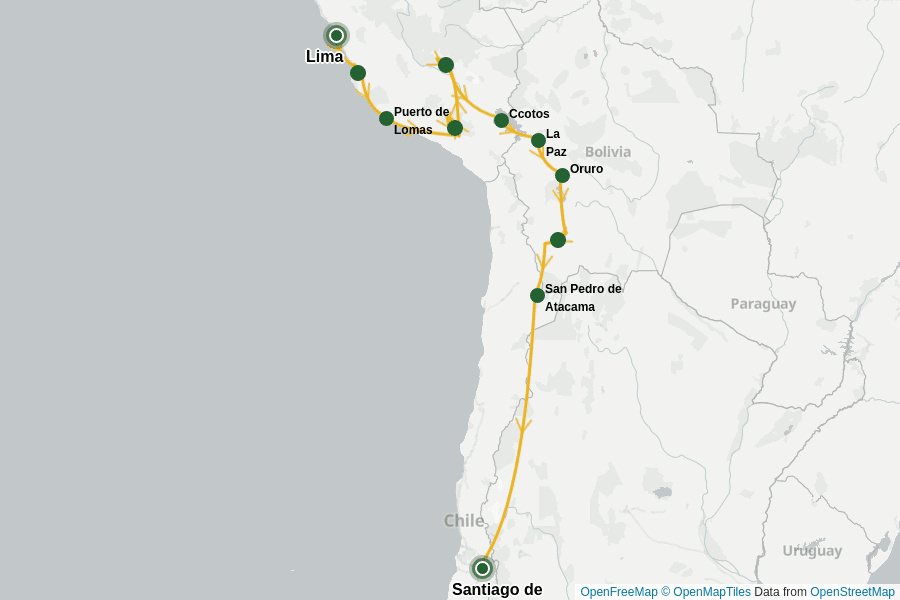
We plan Bolivia itineraries around the altitude with real care — often sequencing routes to build height gradually (starting lower, in Sucre or across the border in Peru's Sacred Valley, before La Paz and the highest points), keeping the crucial first days gentle, and allowing rest where it's needed. Our small groups mean guides notice quickly if someone is struggling and can adjust the pace; they carry local knowledge of the clinics and remedies, and know how to make the most of these extraordinary places without overexertion. None of this makes the altitude vanish — nothing does at 4,000 m — but it's the practical difference between the altitude being a footnote and being a problem.
Frequently asked questions
How high is La Paz? La Paz sits at around 3,640 m, and its airport at El Alto is over 4,000 m — so you often arrive at extreme altitude, higher than Cusco in Peru.
Is Bolivia higher than Peru? Generally yes — Bolivia's classic highland sights (La Paz, Titicaca, Uyuni, Potosí) sit around or above 3,600 m, and you frequently arrive straight into that altitude, making it more demanding than Peru.
Will I get altitude sickness in Bolivia? Most people feel some mild symptoms — headache, breathlessness, poor sleep — especially in the first day or two, easing as they adjust. A gentle, well-sequenced approach keeps it very manageable.
How can I prepare for the altitude? Take the first days very gently, hydrate, avoid alcohol at first, consider starting at a lower point, drink coca tea, and ask your GP about Diamox. Fitness doesn't prevent it, so ease off regardless.
Is the Uyuni salt flats trip hard because of altitude? Uyuni is around 3,660 m and cold, and the tours are long and remote, so it's best done once you've acclimatised, at a gentle pace and well wrapped up. It's very doable with sensible planning.
Can I visit Bolivia with a heart condition? Often yes, with your doctor's sign-off and a carefully planned, gradual itinerary — but given the extreme altitude, this is exactly the case to discuss with your GP before booking.
Related reading
Contact us
We’d love to hear from you. Please fill out this form.
All fields marked with (*) are mandatory.
%3Aformat(webp)%2F02e7f2c3-d3bc-4247-8176-ffa581b64506-vi_ventura_logo_1402px_full_color.png&w=1920&q=75)
%3Aformat(webp)%2Fprofile-picture%2F5fd79a46-6a23-4547-8518-b4068b58975f-f3895e68-219c-4e67-87c6-d80f42d2c815-9D14F6FB-5601-48CA-8E3C-B9B459218497.jpg&w=1920&q=75)
%3Aformat(webp)%2Fprofile-picture%2F16d4fa55-a01d-4c4d-89a0-c0ef30433177-b00f6910-f87f-437d-a370-84b636b084b9-7a1c726f-d235-472c-b4e0-c7553c729b9e.jpeg&w=1920&q=75)
%3Aformat(webp)%2Fprofile-picture%2Ff1b036fb-3cc5-4b59-beb3-f41c82e58932-52bd8473-9a08-49b8-9025-b47e6b62b14c-F427B006-14B0-4847-85AB-D370D8EB1197.jpg&w=1920&q=75)
%3Aformat(webp)%2Fprofile-picture%2F1b94eff9-5e96-4b30-803e-8093ce7b42ef-1630fbda-e666-49b7-9a9e-5ac18b0d1926-2C56EE68-21D4-4E67-BD45-6A6D4199A045.jpg&w=1920&q=75)
%3Aformat(webp)%2Fheader_media%2Fe1ee5a5c-8a9e-4884-8dcf-fd82866a1552-header-xpbc.jpg&w=1920&q=75)
%3Aformat(webp)%2Fimg%2F2048x1536%2F162755.jpg&w=1920&q=75)