%3Aformat(webp)%2Fhubspot_blogs%2F87208013877-lafortunacostarica.jpg&w=1920&q=75)
If altitude is the reason you have ruled out Latin America, you have ruled out the wrong continent.
The Andes are high — Cusco sits at 3,400 metres and our Peru route crosses passes above 4,900. But the Andes are one strip down one side of a very large region. Costa Rica, Mexico's coast and Yucatán, the Galápagos and most of Argentina are all comfortably low, and none of them is a consolation prize.
In short
%3Aformat(webp)%2Fhubspot_blogs%2F7428715829-funnyalpacaswithawesomeamazinghilarioushair17.jpg&w=1920&q=75)
This is worth understanding before you rule anything out, because the common assumption is wrong.
Altitude affects fit and unfit travellers alike. Marathon runners get altitude sickness; sedentary people sometimes sail through it. It is about how quickly your body adapts to thinner air, not about stamina, and it is largely unpredictable in advance.
What genuinely helps is how an itinerary is built: starting low, gaining height gradually, sleeping lower than the day's highest point where possible, and not planning anything strenuous in the first forty-eight hours. Our Peru route starts at sea level in Lima for exactly that reason, then paces the first Cuzco days deliberately.
What does not help is arriving straight into Cuzco from a long-haul flight and going sightseeing — which is what a great many cheaper itineraries do.
If you have a medical reason to avoid altitude, that is a conversation for your doctor rather than for us. If it is simply a worry, read our guide to altitude in Cusco and Machu Picchu and then talk to a specialist.
%3Aformat(webp)%2Fhubspot_blogs%2F146480866949-titicacalakepeople.png&w=1920&q=75)
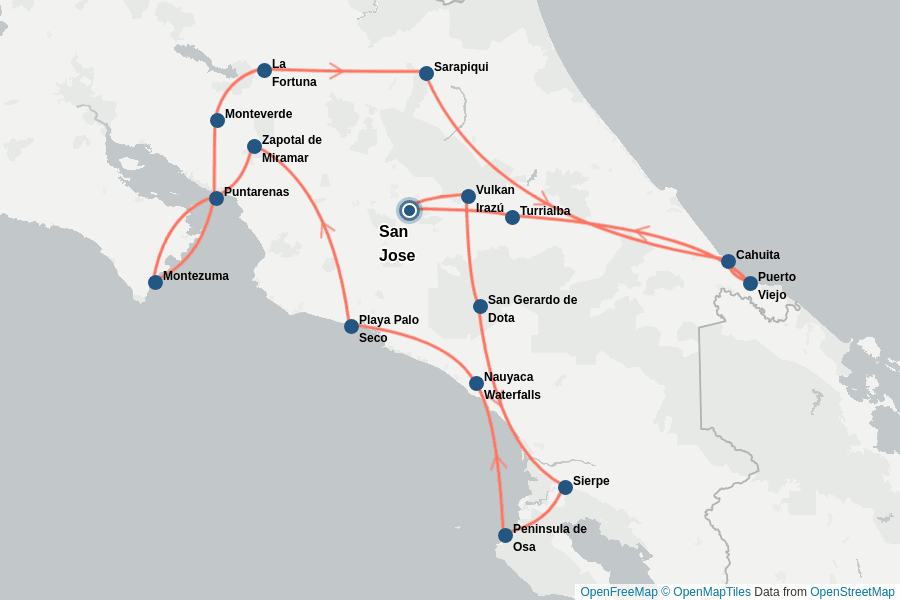
Costa Rica — 18 days. The highest points are the Irazú volcano and the cloud forest at Monteverde, both comfortably below the level where altitude troubles anyone. The rest is rainforest, coast and lowland: Corcovado, Montezuma, Cahuita, Puerto Viejo. Extraordinary wildlife, a gentle pace, no thin air.
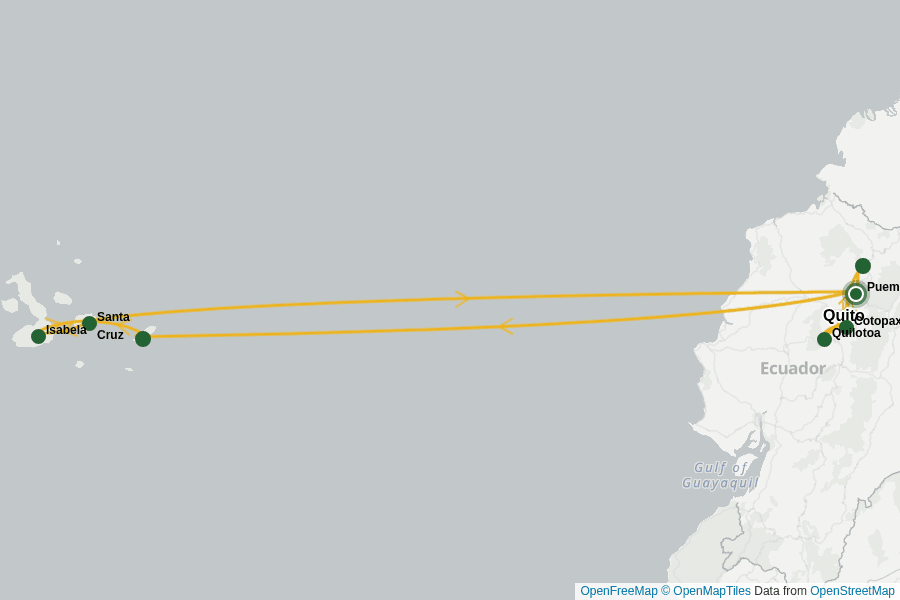
Ecuador & Galápagos — 15 days. Quito and the Cotopaxi area are high — this is the one caveat — but the seven full days in the Galápagos are at sea level, and the islands are the heart of the trip.
Mexico — 15 days. Mexico City and Puebla at the start are above 2,000 metres, so the first days are the high section; after that Oaxaca, Chiapas, Palenque and the Yucatán are all comfortable, and Chichén Itzá and the cenotes are essentially at sea level.
Argentina — 16 days, or Patagonia across three countries — 20 days. Buenos Aires, Iguazú, the glaciers and the tropics: big landscapes, low elevations.
%3Aformat(webp)%2Fimg%2F2048x1536%2F162721.jpg&w=1920&q=75)
Do not give up on it too quickly. Three things are worth knowing.
Machu Picchu is lower than Cusco. The citadel sits around 2,400 metres — roughly a thousand metres below the city most people worry about. Travellers frequently feel better there than they did the day before.
The itinerary does the work. Ours begins at sea level in Lima, flies up to Cusco with unhurried first days, and spends time in the Sacred Valley, which is lower than Cusco. Arequipa, near the end, is a comfortable 2,300 metres.
You are not walking uphill with a pack. Machu Picchu is reached by train and bus — see Peru without trekking — so the demands on your body are far lower than the altitude figure suggests.
The genuinely high sections are the Andean train over the La Raya pass at 4,323 metres and the Patapampa pass at 4,910 metres, both of which are crossed rather than slept at. Our three-country Peru, Bolivia & Chile route, by contrast, spends serious time high — that is the one to avoid if altitude worries you.
%3Aformat(webp)%2Fimg%2F2048x1536%2F219032.jpg&w=1920&q=75)
If you have been medically advised to avoid altitude: Costa Rica, or Argentina, or Mexico with a conversation about the first few days.
If altitude simply worries you and you would rather not risk it: Costa Rica is the most comfortable answer, and the wildlife is a genuine reason to go rather than a fallback.
If you want the Galápagos: the islands are at sea level; discuss the Quito section with a specialist.
If Machu Picchu is the thing you actually want: talk to us before ruling it out. A well-paced itinerary changes this more than people expect.
Every trip here is land-only and runs on guaranteed departures, with a maximum of 12 to 15 travellers. Our guide to which Latin American country to visit first compares them on everything else.

Customer Satisfaction
Ventura Travel Brands' tours have been rated as excellent by travellers
%3Aformat(webp)%2Fe7209c14-91b8-45db-adf7-23e2e7465143-ventura-travel-icon.png&w=1920&q=75)
A trusted travel partner for over 2 decades
Over 100,000 people have travelled with Ventura Travel's brands since 2001

Sustainability Certification – TourCert
As a responsible Tour Operator, we are certified by TourCert
Select Date Range
%3Aformat(webp)%2Fuser%2F97e51b2b-9e9d-4832-b179-05a00540180b-matthew-jones.png&w=1920&q=75)
Matthew Jones
Sales Specialist UK Market
%3Aformat(webp)%2Fuser%2F354bd62e-8c8e-4fc6-92af-6b4b0bfc4a66-imagen_generada.png&w=1920&q=75)
Rosa Pacheco
Trip Specialist
%3Aformat(webp)%2Fheader_media%2Fd3eb0a0f-f33d-4411-9525-314bac547e2d-costa-rica-14-1-.jpg&w=1920&q=75)
%3Aformat(webp)%2Fday_detail%2Faffc94ff-7294-42a4-b667-639d87be182e-costa-rica-45-1-.jpg&w=1920&q=75)
%3Aformat(webp)%2Fgal%2Ffilter%2Fs%2Fm%2Fsmall10_3.jpg&w=1920&q=75)
%3Aformat(webp)%2Fhighlight%2F489ab9a7-6fa3-44d1-9bcd-2de315481fe3-2019-11-06-day-6-seaman-journey-rabida-and-chinese-hat-350-of-497-.jpg&w=1920&q=75)