%3Aformat(webp)%2Fhubspot_blogs%2F123344058414-machupicchu.png&w=1920&q=75)
Latin America has no single season, and that is genuinely useful — it means the month you can travel usually points at a country rather than ruling one out.
The region spans both hemispheres and every altitude from sea level to 4,900 metres, so "summer" means very little. What matters is the dry season where you are going, and those do not line up.
In short
%3Aformat(webp)%2Fhubspot_blogs%2F175845944427-ChichenItza.png&w=1920&q=75)
The obvious months to escape a British winter, and the ones where the region genuinely repays it.
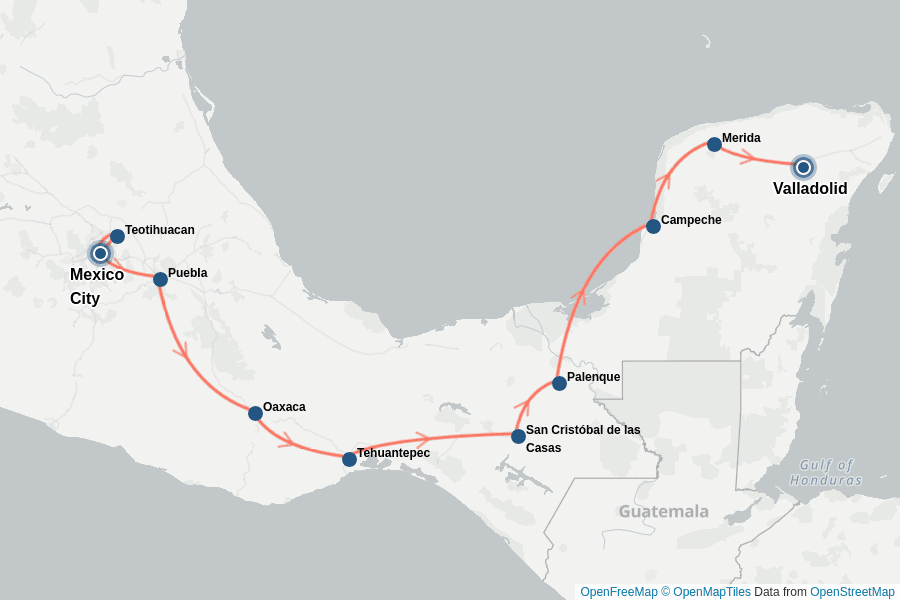
Mexico. Dry, warm and comfortable across the whole route — the highlands pleasant, the Yucatán hot but not oppressive. This is Mexico at its best, and it is when our fifteen-day route runs. Day of the Dead, at the turn of October into November, is a separate question of timing rather than season — see Day of the Dead in Mexico.
Costa Rica. The dry season on the Pacific side. Wildlife concentrates around water, which makes it easier to find, and the trails are in good condition.
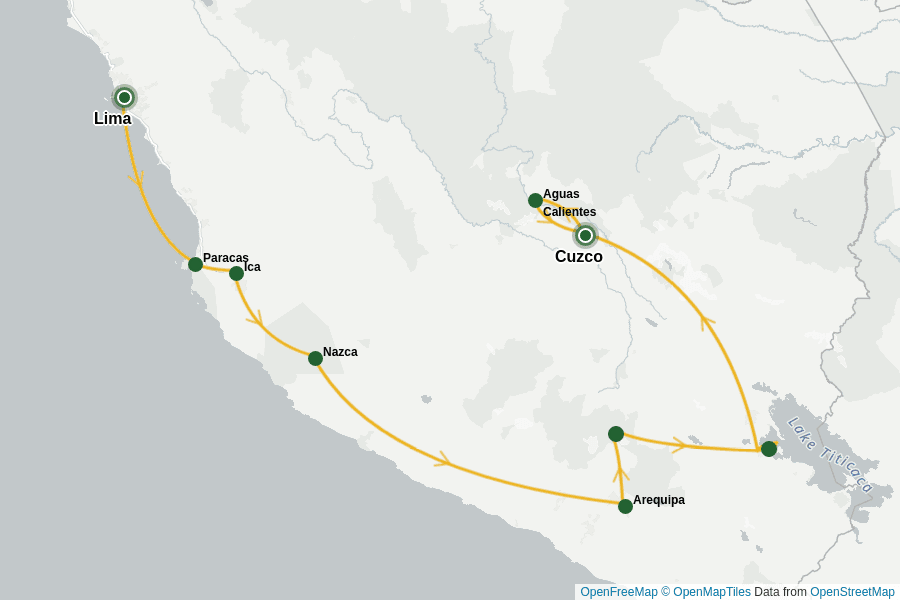
The Andes are in their wet season through much of this window — passable, greener, and not the time we would push you towards for Peru.
One practical note: this is also the British school holiday period around Christmas and Easter, so it is the part of the year where booking early matters most. See how far ahead should you book.
%3Aformat(webp)%2Fhubspot_blogs%2F186865249322-PURDECostaRicaselfdrivevulcano.png&w=1920&q=75)
If you can travel outside the school holidays, this is where we would point you, and it is the honest recommendation rather than the one that fills the quietest departures.
Peru in the shoulder is drier than the deep wet season, considerably quieter than July and August, and greener. Machu Picchu without the peak-season crowd is a different experience.
Costa Rica in April is the end of the dry season — hot, and the wildlife still concentrated. November is the other side of it: the landscape at its greenest.
Ecuador and the Galápagos work more or less year-round, which is one of the underrated arguments for that trip. The islands change character through the year — water temperature, which species are breeding — rather than becoming unsuitable.
Bolivia and Chile, on the 23-day Andean route, are at their most reliable in the drier middle of the year, though the Altiplano is cold at dawn whenever you go.
More on this in shoulder-season long-haul travel.
%3Aformat(webp)%2Fhubspot_blogs%2F172365815732-ColcaCanyon1.jpg&w=1920&q=75)
The classic window for Peru, and for good reason — this is the driest, clearest period in the Andes, with the best chance of the mountains being visible rather than in cloud.
It is also the busiest, the coldest at night, and the period when Cuzco and Machu Picchu are at their fullest. If you are travelling with school holidays, it is likely your window anyway; if you are not, look hard at May or September first.
Costa Rica in these months is in its green season: more rain, usually as an afternoon downpour rather than an all-day event, fewer people, and vegetation at its most spectacular. Wildlife is still there; it is simply spread out rather than gathered at waterholes.
Mexico is warm and wetter, particularly in Chiapas and the Yucatán, though our route runs in the drier months.
One thing that catches British travellers out: the Andes are cold at night all year, and June to August is the coldest. Cuzco in the dry season means bright days and near-freezing evenings.
%3Aformat(webp)%2Fhubspot_blogs%2F101244973143-BilderBPText2.png&w=1920&q=75)
If you already know when you can travel, work in this order.
December to March — Mexico or Costa Rica.
April to May — Peru, Costa Rica or Ecuador. The best all-round window on this page.
June to August — Peru or the full Andean route, accepting the crowds; Costa Rica if you would rather have it green and quiet.
September to November — the widest choice of the year. Peru is still good, Costa Rica is coming back into its dry season, and Mexico's season is beginning.
Every trip is land-only, so you choose the flights that suit you, and every departure runs on guaranteed departures — it goes ahead regardless of how many others have booked, which is the reason a shoulder-season date is not a gamble.
If you are still deciding on the country rather than the month, which Latin American country to visit first is the better starting point.

Customer Satisfaction
Ventura Travel Brands' tours have been rated as excellent by travellers
%3Aformat(webp)%2Fe7209c14-91b8-45db-adf7-23e2e7465143-ventura-travel-icon.png&w=1920&q=75)
A trusted travel partner for over 2 decades
Over 100,000 people have travelled with Ventura Travel's brands since 2001

Sustainability Certification – TourCert
As a responsible Tour Operator, we are certified by TourCert
Select Date Range
%3Aformat(webp)%2Fuser%2Fcbea1ea9-88d3-4e6b-a54d-83d9ff60e1fa-generated_image-2-.png&w=1920&q=75)
Brian Heyel
New Market Director
%3Aformat(webp)%2Fuser%2F97e51b2b-9e9d-4832-b179-05a00540180b-matthew-jones.png&w=1920&q=75)
Matthew Jones
Sales Specialist UK Market
%3Aformat(webp)%2Fday_detail%2F9d867558-f96f-4d35-a27d-a091dd43e6c5-paul-vhze9fd9mrs-unsplash.jpg&w=1920&q=75)
%3Aformat(webp)%2Fday_detail%2Fcc08b512-78f2-4278-97fd-481027441792-aarom-ore-yrqyn1gb80k-unsplash.jpg&w=1920&q=75)
%3Aformat(webp)%2Fheader_media%2F234b5621-7609-4096-83c1-517f02cd4615-9d7bf0fa-de94-4d41-b3da-144d44eee6b4-1.jpg&w=1920&q=75)
%3Aformat(webp)%2Fday_detail%2Ff9bc9895-a941-4c49-bbbd-492e6b2f3271-pxl_20250819_033138598.portrait.jpg&w=1920&q=75)