%3Aformat(webp)%2Fhubspot_blogs%2F90890693971-whattodointulumpurBP.png&w=1920&q=75)
Yes — the parts of Mexico that visitors actually travel to are safe for over-60s, and enjoyed by millions of tourists every year. The honest and important nuance is that Mexico's safety varies enormously by region. The headlines about cartel violence are real, but that violence is concentrated in specific areas — mostly away from tourist destinations — which you simply won't go to. The classic visitor regions — the Yucatán (Cancún, Tulum, Mérida), Mexico City, Oaxaca and the colonial highlands — are welcoming and, with normal precautions, safe.
The realistic day-to-day risks in these areas are petty theft and the occasional scam or unlicensed taxi, not the dramatic dangers of the news. The single most valuable thing you can do is travel with a good operator, who keeps you in the safe regions, handles transport, and knows the ground — turning Mexico from a place people worry about into one of the most rewarding trips imaginable.
Below is an honest look at Mexico's regional picture, the everyday precautions, taxis and roads, health, and how a guided trip keeps you safe.
The quick answer
%3Aformat(webp)%2Fday_detail%2F98fb3bcf-31f0-4e52-b4c0-e65c2852dcea-dominika-hesounova-xrut7d_ijre-unsplash.jpg&w=1920&q=75)
Let's address the elephant in the room directly. Mexico does have serious, well-publicised cartel-related violence — but it is highly concentrated geographically, affecting particular states and areas, mostly well away from where tourists go. The UK government's travel advice maps this out region by region, advising against travel to certain areas while the great tourist destinations remain open and popular.
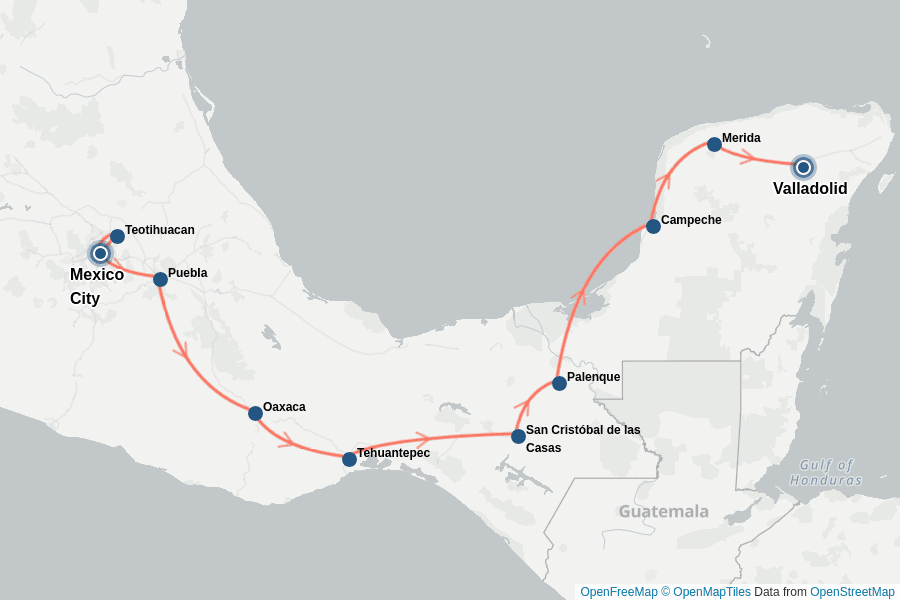
The regions visitors actually travel to — the Yucatán Peninsula (Cancún, the Riviera Maya, Tulum, Mérida and Chichén Itzá), Mexico City, Oaxaca, the colonial highland cities (San Miguel de Allende, Guanajuato), and the Copper Canyon — are welcoming, well-policed in their tourist zones, and visited by huge numbers of people every year without incident.
So the key to a safe Mexico trip is simple: go to the right places (which any reputable operator ensures), and apply the ordinary big-city and travel precautions you would anywhere.
In the safe regions, the precautions are the familiar ones for any destination:
Tourists in the main destinations are rarely troubled by anything more than opportunistic theft, and even that is uncommon with sensible care. Mexico's warmth and hospitality are what most visitors remember.
How you move around matters most for safety and comfort:
On a guided trip, all of this is arranged — your transport is booked, your routes are sensible, and you never have to worry about which taxi or road is safe.
%3Aformat(webp)%2Fimg%2F2048x1536%2F314195.jpg&w=1920&q=75)
Health. No vaccinations are compulsory from the UK, though a travel clinic may recommend some. Stick to bottled or purified water to avoid stomach upsets (the commonest ailment), and use insect repellent in tropical areas, as dengue occurs. Altitude is a mild factor in Mexico City (2,240 m) — take the first day gently. The sun and heat in the Yucatán call for hydration and sunscreen. Comprehensive travel insurance covering your age and any conditions is essential. This is general guidance, not medical advice.
How our experience helps
The single best safety measure in Mexico is travelling with people who know the country, and that's exactly what we provide. We keep you firmly in the safe, rewarding regions, arrange all your transport so the taxi and road questions never arise, choose comfortable, secure hotels, and set a sensible pace. Our local guides know which areas to enjoy and which to skip, and bring Mexico's extraordinary history, culture and food to life. For a great many of our over-60s travellers, a guided trip turned Mexico from the destination they were unsure about into a firm favourite.
Frequently asked questions
Is Mexico safe for older tourists? The main tourist regions — the Yucatán, Mexico City, Oaxaca and the colonial highlands — are safe with normal precautions, and visited by millions. Safety varies by region, so it's about going to the right places.
Which parts of Mexico should I avoid? Certain states and areas affected by cartel violence, mostly away from tourist destinations. Check the UK government's region-by-region travel advice, or simply travel with an operator who keeps you in the safe regions.
Is Cancún and the Riviera Maya safe? Yes, with normal precautions — the Yucatán's tourist areas are among Mexico's most visited and welcoming. Keep valuables secure, use booked taxis, and take care in nightlife areas.
Is it safe to use taxis in Mexico? Use booked, hotel-arranged or app taxis (Uber) rather than hailing unmarked cabs on the street. On a guided trip, your transport is arranged, so this isn't a concern.
Is it safe to drive in Mexico? In tourist areas by day, generally yes, but avoid driving at night on intercity roads in certain regions. Many over-60s prefer a driver or guided transport for comfort and peace of mind.
Is the food and water safe? Stick to bottled or purified water and eat at busy, popular places. Mexico's cuisine is a highlight, and most people enjoy it with nothing worse than a brief adjustment.
Related reading
Contact us
We’d love to hear from you. Please fill out this form.
All fields marked with (*) are mandatory.
%3Aformat(webp)%2F02e7f2c3-d3bc-4247-8176-ffa581b64506-vi_ventura_logo_1402px_full_color.png&w=1920&q=75)
%3Aformat(webp)%2Fprofile-picture%2F5fd79a46-6a23-4547-8518-b4068b58975f-f3895e68-219c-4e67-87c6-d80f42d2c815-9D14F6FB-5601-48CA-8E3C-B9B459218497.jpg&w=1920&q=75)
%3Aformat(webp)%2Fprofile-picture%2F16d4fa55-a01d-4c4d-89a0-c0ef30433177-b00f6910-f87f-437d-a370-84b636b084b9-7a1c726f-d235-472c-b4e0-c7553c729b9e.jpeg&w=1920&q=75)
%3Aformat(webp)%2Fprofile-picture%2F1b94eff9-5e96-4b30-803e-8093ce7b42ef-1630fbda-e666-49b7-9a9e-5ac18b0d1926-2C56EE68-21D4-4E67-BD45-6A6D4199A045.jpg&w=1920&q=75)
%3Aformat(webp)%2Fheader_media%2F234b5621-7609-4096-83c1-517f02cd4615-9d7bf0fa-de94-4d41-b3da-144d44eee6b4-1.jpg&w=1920&q=75)
%3Aformat(webp)%2Fday_detail%2Ff9bc9895-a941-4c49-bbbd-492e6b2f3271-pxl_20250819_033138598.portrait.jpg&w=1920&q=75)